


Cartea lui Enoh, cartea despre Dumnezeu și despre îngeri
0 comentarii Publicat de scoalamisterelor la 14:15
Unul dintre cele mai enigmatice manuscrise descoperite la Marea Moartă este Cartea lui Enoh, text considerat apocrif de către autorităţile bisericeşti. În urma unor îndelungate controverse, cercetătorii au ajuns la concluzia că aceasta a fost „cartea de căpătâi” a lui Iisus şi că El o ştia pe de rost, ceea ce explică numărul mare de pasaje din Cartea lui Enoh citate în Evanghelii.
Teologii experţi în Sfânta Scriptură au afirmat timp de sute de ani, în decursul secolelor al XIX-lea şi al XX-lea, că textele lui Enoh au fost scrise cu cel puţin 100 de ani şi cu cel mult 300 de ani după moartea lui Iisus. A existat o întreagă dispută asupra subiectului anteriorităţii Cărţii lui Enoh faţă de Evanghelii.
Însă descoperirea manuscriselor din cea de-a patra cavernă de la Qumran a permis stabilirea în mod ştiinţific a faptului că textele lui Enoh disponibile la ora actuală sunt anterioare cu cel puţin 200 de ani naşterii lui Iisus.
Una din implicaţiile majore ale acestei descoperiri este faptul că astfel se dovedeşte că Iisus era un foarte bun cunoscător al Cărţii lui Enoh, că aceasta era de fapt cartea Lui preferată, dacă ţinem cont de numărul frazelor „enohiene” care se regăsesc în rostirile Sale, aşa cum sunt ele relatate în Evanghelii. Mai mult, scrierile lui Enoh propulsează cititorul într-o nouă şi fascinantă dimensiune, cea a lumilor astrale. Ele conţin toate revelaţiile pe care ni le-au adus cercetările realizate în ultimii douăzeci de ani de către dr. Raymond Moody, dr. Elisabeth Kübler-Ross şi dr. Melvin Morse asupra fenomenului EGVM – experienţe la graniţele dintre viaţă şi moarte. De asemenea, revelaţiile cuprinse în Cartea lui Enoh sunt întru totul la unison, până în cele mai mici detalii, cu descoperirile lui Robert Monroe referitoare la experienţele extracorporale (ieşirile din corpul fizic în decursul dedublării astrale) – de pildă, fenomenul retrăririi in extenso a vieţii de până în acel moment (faptul de a-ţi revedea întreaga viaţa „defilând” prin faţa ochilor).
Link pentru download
April D. De Conick - Seek to See Him: Ascent and Vision Mysticism in the Gospel of Thomas
0 comentarii Publicat de scoalamisterelor la 10:54
This monograph represents a critical juncture in Thomas studies since it dispels the belief that the Gospel of Thomas originates from gnostic traditions. Rather, Jewish mystical and Hermetic origins are proposed and examined. Following this analysis, the anthropogony and soteriology of Thomas are discussed. The Thomasites taught that they were the elect children of the Father, originating from the Light. The human, however, became unworthy of these luminous beginnings and was separated from the divine when Adam sinned. Now he must purify himself by leading an encratite lifestyle. He is to ascend into heaven, seeking a visio dei which will transform him into his original immortal state and grant him citizenship in the Kingdom.
226 pages, 10.7 MB, PDF. Scan.
http://www.4shared.com/file/188898054/7d79192e/April_D_DeConick_-_Seek_to_See.html

When we think of "heaven," we generally conjure up positive, blissful images. Heaven is, after all, where God is and where good people go after death to receive their reward. But how and why did Western cultures come to imagine the heavenly realm in such terms? Why is heaven usually thought to be "up there," far beyond the visible sky? And what is the source of the idea that the post mortem abode of the righteous is in this heavenly realm with God?
Seeking to discover the roots of these familiar notions, this volume traces the backgrounds, origin, and development of early Jewish and Christian speculation about the heavenly realm -- where it is, what it looks like, and who its inhabitants are. Wright begins his study with an examination of the beliefs of ancient Israel's neighbors Egypt and Mesopotamia, reconstructing the intellectual context in which the earliest biblical images of heaven arose. A detailed analysis of the Hebrew biblical texts themselves then reveals that the Israelites were deeply influenced by images drawn from the surrounding cultures. Wright goes on to examine Persian and Greco-Roman beliefs, thus setting the stage for his consideration of early Jewish and Christian images, which he shows to have been formed in the struggle to integrate traditional biblical imagery with the newer Hellenistic ideas about the cosmos. In a final chapter Wright offers a brief survey of how later Jewish, Christian, and Islamic traditions envisioned the heavenly realms. Accessible to a wide range of readers, this provocative book will interest anyone who is curious about the origins of this extraordinarily pervasive and influential idea.
337 pages, 6.56 MB, PDF.
http://www.4shared.com/file/148593735/6 ... eaven.html
Bernard Homer - The Image of the Cross and Lights on the Altar, in the Christian Church, and in Heathen Temples before the Christian Era (1879)
0 comentarii Publicat de scoalamisterelor la 16:05
The image of the Cross and Lights on the Altar, in the Christian Church, and in heathen temples before the Christian era, especially in the British Isles, together with the history of the triangle, the dove, floral decorations, the easter egg, and other heathen symbols.
66 pages, 2.95 MB, PDF. Scan.
http://www.4shared.com/file/145738120/b ... ples_befor e_the_Christian_Era.html
Willis Barnstone and Marvin Meyer - The Gnostic Bible: Gnostic Texts of Mystical Wisdom form the Ancient and Medieval Worlds
0 comentarii Publicat de Glaring Wolf la 10:14
871 pages, 11.7 MB, PDF.
http://www.4shared.com/file/87493470/8b ... Bible.html
Kersey Graves and Paul Tice - The World's Sixteen Crucified Saviors
0 comentarii Publicat de Glaring Wolf la 09:58
Is the Bible true? Ever since Tom Paines daring Age of Reason at the end of the eighteenth century, Freethinkers have sought a rational, non-mystical view of the universe, and their arguments against dogmatic Christianity have often been reinforced by appeals to pagan religions which contain myths paralleling the New Testament stories and throwing doubt on their priority or historicity. Freethinkers aggressive attacks on dogma. Nowadays the cause of literary freedom and tolerance demands that the Freethought case be properly heard. THE WORLDS SIXTEEN CRUCIFIED SAVIORS is a Freethought classic. It is a popular discussion of the Saviors, Messiahs, or Sons of God preceding the Christian era, and the rituals and religions which surrounded them. It is a vigorous criticism of the orthodox Christian position. -- Leslie Shepard, London, 1970
Startling and extraordinary revelations in religious history, which disclose the oriental origin of all the doctrines, principles, percepts, and the miracles of the Christian new Testament and furnishing a key for unlocking many of its sacred mysteries, besides comprising the history of 16 Heathen Crucified Gods. -- Publisher --This text refers to the Paperback edition.
Product Description
Known to be a masterpiece of freethought literature, The World's Sixteen Crucified Saviors has been out of print but sought after for many years. A small part of it was reprinted in The Book Your Church Doesn't Want You to Read in 1994, thereby causing renewed interest. Many people are unaware that before Christianity there were 15 other religions that also had a savior who died for their sins, then arose from the dead. Graves gives all the details inside, plus much more found in common like the immaculate conception of the gods, virgin born gods, magi, shepherds and angels who visit the infant saviors, the birthday of the gods being December 25th, plus an explanation as to how Jesus began to be worshiped as a God. Some scholars are suggesting that Jesus had spent time in India. One chapter in this book discusses 346 striking analogies between Christ and Chrishna, the Hindu god. Could this same story have traveled from India rather than the man himself? Could this ever-present story, "the greatest story ever told," be the common link between all early religions? Has the purpose of religion, in general, been designed to provide all of mankind with a common set of beliefs, to keep us from learning the real truth for ourselves? It is difficult to answer these questions, and it probably always will be, but this book offers us a small step closer to the answers. It shows that Christianity is not alone and special in its beliefs, and may cause us to explore further into the origins of religion.
Table of Contents:
Preface
Contents
Explanation
Introduction
Address to the Clergy
Chapter I: Rival Claims of the Saviors
Chapter II: Messianic Prophecies
Chapter III: Prophecies by the Figure of a Serpent
Chapter IV: Miraculous and Immaculate Conception of the Gods
Chapter V: Virgin Mothers and Virgin-Born Gods
Chapter VI: Stars Point Out the Time and the Saviors’ Birth-Place
Chapter VII: Angels, Shepherds, and Magi Visit the Infant Saviors
Chapter VIII: The Twenty-Fifth of December the Birthday of the Gods
Chapter IX: Titles of the Saviors
Chapter X: The Saviors of Royal Descent, But Humble Birth
Chapter XI: Christ's Genealogy
Chapter XII: The World's Saviors Saved from Destruction in Infancy
Chapter XIII: The Saviors Exhibit Early Proofs of Divinity
Chapter XIV: The Saviors’ Kingdoms Not of this World
Chapter XV: The Saviors Were Real Personages
Chapter XVI: Sixteen Saviors Crucified
Chapter XVII: The Aphanasia, or Darkness, at the Crucifixion
Chapter XVIII: Descent of the Saviors into Hell
Chapter XIX: Resurrection of the Savior
Chapter XX: Reappearance and Ascension of the Saviors
Chapter XXI: The Atonement—Its Oriental or Heathen Origin
Chapter XXII: The Holy Ghost of Oriental Origin
Chapter XXIII: The Divine “Word” of Oriental Origin
Chapter XXIV: The Trinity Very Anciently a Current Heathen Doctrine
Chapter XXV: Absolution, and the Confession of Sins, of Heathen Origin
Chapter XXVI: Origin of Baptism by Water, Fire, Blood, and the Holy Ghost
Chapter XXVII: The Sacrament or Eucharist of Heathen Origin
Chapter XXVIII: Anointing with Oil of Oriental Origin
Chapter XXIX: How Men, Including Jesus Christ, Came to be Worshipped as Gods
Chapter XXX: Sacred Cycles Explaining the Advent of the Gods, the Master-Key to the Divinity of Jesus Christ
Chapter XXXI: Christianity Derived from Heathen and Oriental Systems
Chapter XXXII: Three Hundred and Forty-Six Striking Analogies Between Christ and Chrishna
Chapter XXXIII: Apollonius, Osiris, Magus, Etc.—Gods
Chapter XXXIV: The Three Pillars of the Christian Faith—Miracles, Prophecies, and Precepts
Chapter XXXV: Logical or Common Sense View of the Doctrine of Divine Incarnation
Chapter XXXVI: Philosophical Absurdities of the Doctrine of the Divine Incarnation
Chapter XXXVII: Physiological Absurdities of the Doctrine of the Divine Incarnation
Chapter XXXVIII: A Historical View of the Divinity of Jesus Christ
Chapter XXXIX: The Scriptural View of Christ's Divinity
Chapter XL: A Metonymic View of the Divinity of Jesus Christ
Chapter XLI: The Precepts and Practical Life of Jesus Christ
Chapter XLII: Christ As a Spiritual Medium
Chapter XLIII: Conversion, Repentance, and “Getting Religion” of Heathen Origin
Chapter XLIV: The Moral Lessons of Religious History
Chapter XLV: Conclusion and Review
Notes
176 pages, 1.46 MB, PDF.
http://rapidshare.com/files/185429719/K ... aviors.pdf
Freke (a philospher and author of books on spirituality) and Gandy (who is studying classical civilization) believe that first century Jewish mystics adapted the potent symbolism of the Osiris-Dionysus myths into a myth of their own, the hero of which was the Jewish dying and resurrecting godman Jesus. Therefore, the story of Jesus is a consciously crafted vehicle for encoded spiritual teachings created by Jewish Gnostics. We are unaware of this, they claim, because the Roman Catholic Church destroyed evidence of the connection between Christianity and the pagan mysteries. They make their case by offering an examination of mystery religions, especially Greek, pointing out the many parallels between them and what they see as the Gospels! message about Jesus. Freke and Gandy are familiar with a significant amount of recent biblical scholarship, though they rely mostly on Elaine Pagels!s work on the Gnostics. This book will obviously be controversial, but the authors are quite informed, as demonstrated by their extensive notes and bibliography. A list of related web sites, a Who!s Who, and an index add to the book!s usefulness. Recommended as an important book in the debate on the historical Jesus.
Table of Contents:
Chapter 1 – The Unthinkable Thought
Chapter 2 – The Pagan Mysteries
Chapter 3 – Diabolical Mimicry
Chapter 4 – Perfected Platonism
Chapter 5 – The Gnostics
Chapter 6 – The Jesus Code
Chapter 7 – The Missing Man
Chapter 8 – Was Paul a Gnostic?
Chapter 9 – The Jewish Mysteries
Chapter 10 – The Jesus Myth
Chapter 11 – An Imitation Church
Chapter 12 – The Greatest Story Ever Told
255 pages, 1.43 MB, PDF.
http://rapidshare.com/files/182808655/T ... teries.pdf

Jakob Böhme - The epistles of Jacob Behmen aliter, Teutonicus philosophus : very usefull and necessary for those that read his writings, and are very
0 comentarii Publicat de Glaring Wolf la 09:42
Jacob Boehme (1575-1624), beyond a doubt, is one of the greatest of Christian Gnostics. I am using the word not in the sense of the so-called heretics of the opening centuries of the Christian era, but to indicate a wisdom grounded in revelation and employing myths and symbols rather than concepts - a wisdom much more contemplative than discursive. Such is religous philosophy, or theosophy.
288 pages, 28.6 MB, PDF. Scan.
http://rapidshare.com/files/149103483/T ... Behmen.pdf

Michael Molinos - The Spiritual Guide (1675) which disintangles the soul and brings it by the inward way to the fruition of perfect contemplation and the rich treasure of internal peace
So Powerful was its influence on Europe that within 6 years of its release this book had been translated into every language in Western Europe. In Naples, Italy it was said that 20,000 Christians gathered in small groups to practice inward prayer.
Michael Molinos came closer to reforming the Catholic Church than any other single man in history, yet he ended up sealed in a dungeon, his book condemned. A man so controversial that even until today the Vatican will not release the transcript of his (secret) trial. Now for the first time ever, this book appears in modern English. The first English language release in over a hundred years.
118 pages, 714 KB, PDF.
http://rapidshare.com/files/176074745/M ... _Guide.pdf
Albert the Great or Albertus Magnus (1206-1280) was born in Swabia, the son of a military nobleman. He was a Dominican priest who taught theology in Cologne and Paris. His most distinguished student was Saint Thomas Aquinas. Albert was called "Doctor universalis" because his breadth of knowledge spanned not only philosophy and theology but all the natural sciences.
He was a dedicated student of nature, and although he argued that the physical world can only be known reliably through observation and comparison, Albert distinguished between truths, which are naturally knowable, and mysteries, which cannot be known without revelation. People can only reach God through Himself-that is, by leaving behind the entanglements of earthly things and contemplating Him exculsively. The image and reality of God's incarnation in Jesus gives human beings the opportunity to attain a more perfect knowledge of God through contemplation. Albert refers to the teaching of St. Peter, "Cast all your anxiety on him, because he cares for you" (1 Peter 5.7).
120 pages, 3.73 MB, PDF. Scanned from 1911 edition.
http://rapidshare.com/files/176067831/A ... th_God.pdf

Thomas Inman - Ancient Pagan and Modern Christian Symbolism
0 comentarii Publicat de Glaring Wolf la 06:37
206 pages.
http://rapidshare.com/files/81168537/Th ... bolism.pdf
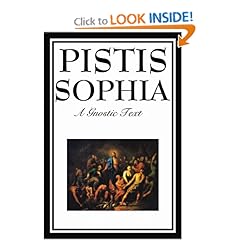
The female divinity of gnosticism is Sophia, a being with many aspects and names. She is sometimes identified with the Holy Ghost itself but, according to her various capacities, is also the Universal Mother, the Mother of the Living or Resplendent Mother, the Power on High, She-of-the-left-hand (as opposed to Christ, understood as her husband and he of the Right Hand), as the Luxurious One, the Womb, the Virgin, the Wife of the Male, the Revealer of Perfect Mysteries, the Saint Columba of the Spirit, the Heavenly Mother, the Wandering One, or Elena (that is, Selene, the Moon). She was envisaged as the Psyche of the world and the female aspect of Logos (Christ).
The text proclaims that Jesus remained on earth after the resurrection for 11 years, and was able in this time to teach his disciples up to the first (i.e. beginner) level of the mystery. It starts with an allegory paralleling the death and resurrection of Jesus, and describing the descent and ascent of the soul. After that it proceeds to describe important figures within the gnostic cosmology, and then finally lists 32 carnal desires to overcome before salvation is possible, overcoming all 32 constituting salvation.
396 pages. Recommended!!!
http://rapidshare.com/files/71948967/G. ... Sophia.pdf

The Nag Hammadi Library, a collection of thirteen ancient codices containing over fifty texts, was discovered in upper Egypt in 1945. This immensely important discovery includes a large number of primary Gnostic scriptures -- texts once thought to have been entirely destroyed during the early Christian struggle to define "orthodoxy" -- scriptures such as the Gospel of Thomas, the Gospel of Philip, and the Gospel of Truth.
The discovery and translation of the Nag Hammadi library, completed in the 1970's, has provided impetus to a major re-evaluation of early Christian history and the nature of Gnosticism.
CONTENTS:
* The Acts of Peter and the Twelve Apostles
* Allogenes
* The Apocalypse of Adam
* The (First) Apocalypse of James
* The (Second) Apocalypse of James
* The Apocalypse of Paul
* The Apocalypse of Peter
* The Apocryphon of James:
o (Williams translation)
o (Cameron translation)
* The Apocryphon of John
o Wisse translation
o Waldstein & Wisse - Short Version translation
o Waldstein & Wisse - Long Version translation
o Davies translation
o (See the Aprocryphon of John Collection for more information on the text)
* Asclepius 21-29
* Authoritative Teaching
* The Book of Thomas the Contender
* The Concept of Our Great Power
* The Dialogue of the Savior
* The Discourse on the Eighth and Ninth
* Eugnostos the Blessed*
* The Exegesis on the Soul
* The Gospel of the Egyptians*
* The Gospel of Philip
* The Gospel of Thomas:
o (Patterson & Meyer translation)
o (Lambdin translation)
o (Patterson & Robinson Translation)
o (Grondin interlinear translation)
o (See the Gospel of Thomas Collection for more information on the text)
* The Gospel of Truth:*
o (Grant translation)
o (Attridge & MacRae translation)
* The Hypostasis of the Archons
* Hypsiphrone
* The Interpretation of Knowledge
* The Letter of Peter to Philip
* Marsanes
* Melchizedek
* On the Anointing
* On the Baptism A
* On the Baptism B
* On the Eucharist A
* On the Eucharist B
* On the Origin of the World*
* The Paraphrase of Shem
* Plato, Republic 588A-589B
* The Prayer of the Apostle Paul
* The Prayer of Thanksgiving
* The Second Treatise of the Great Seth
* The Sentences of Sextus
* The Sophia of Jesus Christ
* The Teachings of Silvanus
* The Testimony of Truth
* The Thought of Norea
* The Three Steles of Seth
* The Thunder, Perfect Mind
* The Treatise on the Resurrection
* Trimorphic Protennoia
* The Tripartite Tractate
* A Valentinian Exposition
* Zostrianos
460 pages. The ebook contains many hermetic and gnostic profound teachings and texts. A MUST !!!
http://rapidshare.com/files/57944123/Nag_Hammadi.pdf
C.W.King - The Gnostics And Their Remains (1887)
Gnosticism (early christian mystic sect) and its Sources; The Worship of Mithras and Serapis; Abraxas, Abraxaster and Abraxoid Gems; Monuments of Gnosticism; Templars, Rosicruicians, and Freemasons; Descriptions of Plates and Engravings.
About 500 pages with illustrations.
http://rapidshare.com/files/57667518/C. ... emains.pdf


This unexpected juxtaposition of a theological treatise and a magical amulet allows Izmirlieva to reveal lists’ rhetorical potential to create order and to function as both tools of knowledge and of power. Despite the two different visions of order represented by each list, Izmirlieva finds that their uses in Christian practice point to a complementary relationship between the existential need for God’s protection and the metaphysical desire to submit to his infinite majesty—a compelling claim sure to provoke discussion among scholars in many fields.
251 pages, 2.41 MB, PDF.
http://www.4shared.com/file/153418167/102fbbf1/Valentina_Izmirlieva_-_All_the_Names_of_the_Lord.html
Postări mai vechi Pagina de pornire


